

Wain & Naysmith Lawyers has been part of the Marlborough community since 1932 and is a proud supporter of many community initiatives of varying sizes.
We support wellbeing in our community through Surfing for Farmers, local events such as the A&P show as well as various local sports groups such as Bowls Marlborough, Marlborough Golf Club and local school groups. On the business front, we sponsor and support Angel Investors Marlborough – giving new start-ups the opportunity to take their business to Marlborough.
Our lawyers are encouraged to participate in local community activities such as Marlborough Chamber of Commerce networking events and the local Business Trust breakfasts.
And, of course our legal team are active members of the Marlborough branch of the New Zealand Law Society.
HISTORY
The story of Wain and Naysmith centres on a line of highly capable lawyers spanning nine decades, an iconic Parsonage, the evolving social and economic dynamics of the Marlborough region, and of course rapid and disruptive technology changes in legal services.
The legal firm of Wain and Naysmith traces back to 1932, when George Spence returned home to practice law on his own account. He had previously been in partnership with Richard McCallum and C H Mills from 1912 until he left Blenheim in 1917.
Spence won national recognition for his for a lifetime of work with the Aero Club and the SPCA, and received an O.B.E. He retired in 1957.
Fergus Paterson joined Spence in practice in 1948. After Paterson became Crown Solicitor in 1961, he was joined by F W (Frank) Bremner and John Wain – the firm then called Paterson Bremner and Wain.
Paterson was the last Blenheim resident Crown Solicitor. When he retired the Crown law work was done by the Crown Law Office in Wellington. He retired from the partnership and became a Magistrates/District Court Judge and was for a period the Chief District Court Judge.
Paterson wrote the Marlborough chapter in the book Portrait of a Profession, The Centennial Book of the New Zealand Law Society (1969), recording the history of legal practice in Marlborough.
Frank Bremner left the practice when he was appointed a judge in one of the Pacific Islands. He later came back to New Zealand and was a District/Family Court Judge.
Forward to 1974, and the firm (now Wain and Drylie) purchased the historic Parsonage from the Methodist Church, and refurbished it into their law offices, Parsonage Chambers, where the firm has operated from ever since.
Parsonage Chambers has been a defining feature of the Wain and Naysmith law firm, being an icon of Marlborough’s history prominently located on High Street. Visitors to the region stop and take photos, and clients of the firm often ask about the heritage of the ‘old house’.
John Drylie left the firm to study and then become a Presbyterian minister in Hokitika where he later retired. Drylie was also Mayor of Westland for two terms.
In 1981 John Wain was joined in partnership by Alan Naysmith, with the name changing to the now familiar Wain and Naysmith.
The years between the 1980s and the early 2000s in Marlborough were notable for the relatively rapid development of the wine industry. Land use changed from arid pastoral farming and horticulture to predominantly viticulture. This meant a lot of legal work in the area of land subdivision, sale and purchase, grape supply agreements, new businesses and financing arrangements.
Martyn Wilson joined the firm in 2006 and became a partner in 2008. Martyn spent the first twelve years of his career with New Zealand Police, was a detective in the CIB and the Armed Offenders Squad, before becoming a lawyer.
The firm’s first female partner, Audrey Seaton, joined the firm as a result of an amalgamation of her firm Townsend Seaton with Wain and Naysmith in 2011.In April 2026 Audrey retired from being a Director and is now a consultant with Wain & Naysmith. Kate Weaver is now a Director of the firm and together with Marty Wilson and Angela Stafford, who became a director in 2020, leads the firm into the future.
Being a knowledge-industry, legal services worldwide have embraced modern technology, and this has been a big part of Wain and Naysmith’s story. Pioneers like George Spence operated using volumes of large law books, fountain pens and blotting paper. In those days, a typewriter was modern technology.
Contrast that with the firm today where most of our work is based in the “cloud”. We have an online phone system that sounds just like the old phones to our clients but allows us to integrate our calls with our client files. Our practice management system brings us the latest in technology to allow us to manage our clients and their work in a highly efficient, secure environment whilst being able to access all necessary information, communicate with our clients and other parties all from within the electronic version of the file. Yes, we still use paper but are reducing our impact on the planet.
Wain and Naysmith continues to embrace new technology to support their work, but also choose to honour the firm’s heritage by lovingly maintaining the historic Parsonage and having some of the icons of the past on display.
Chronology of the Firm's Partners
- 1932-1957George Spence
- 1948-1960sFergus Paterson
- 1957-1970sFrank Bremner
- 1960s-2010John Wain
- 1970sJohn Drylie
- 1981-2016Alan Naysmith
- 2009-currentMartyn Wilson
- 2011Audrey Seaton
- 2020-currentAngela Stafford
- 2026-currentKate Weaver
Property
Law
Business
Law
Family
Law
Estates & Family Trusts
Elder
Law
PARSONAGE CHAMBERS
Parsonage Chambers is a defining feature of the Wain Naysmith law firm, being an icon of Marlborough’s architectural history, prominently located on High Street.
The old homestead was the original parsonage for the Methodist church, built in 1911 from parishioners’ donations for about 1000 pounds.
Wain & Naysmith Lawyers (then called Wain and Drylie) purchased the parsonage from the Methodist Church in 1974, refurbished it for their law offices, and has operated from there ever since.
The old galley kitchen, wash-house and fowl-house have eventually given way to modern offices, interview rooms and reception area.
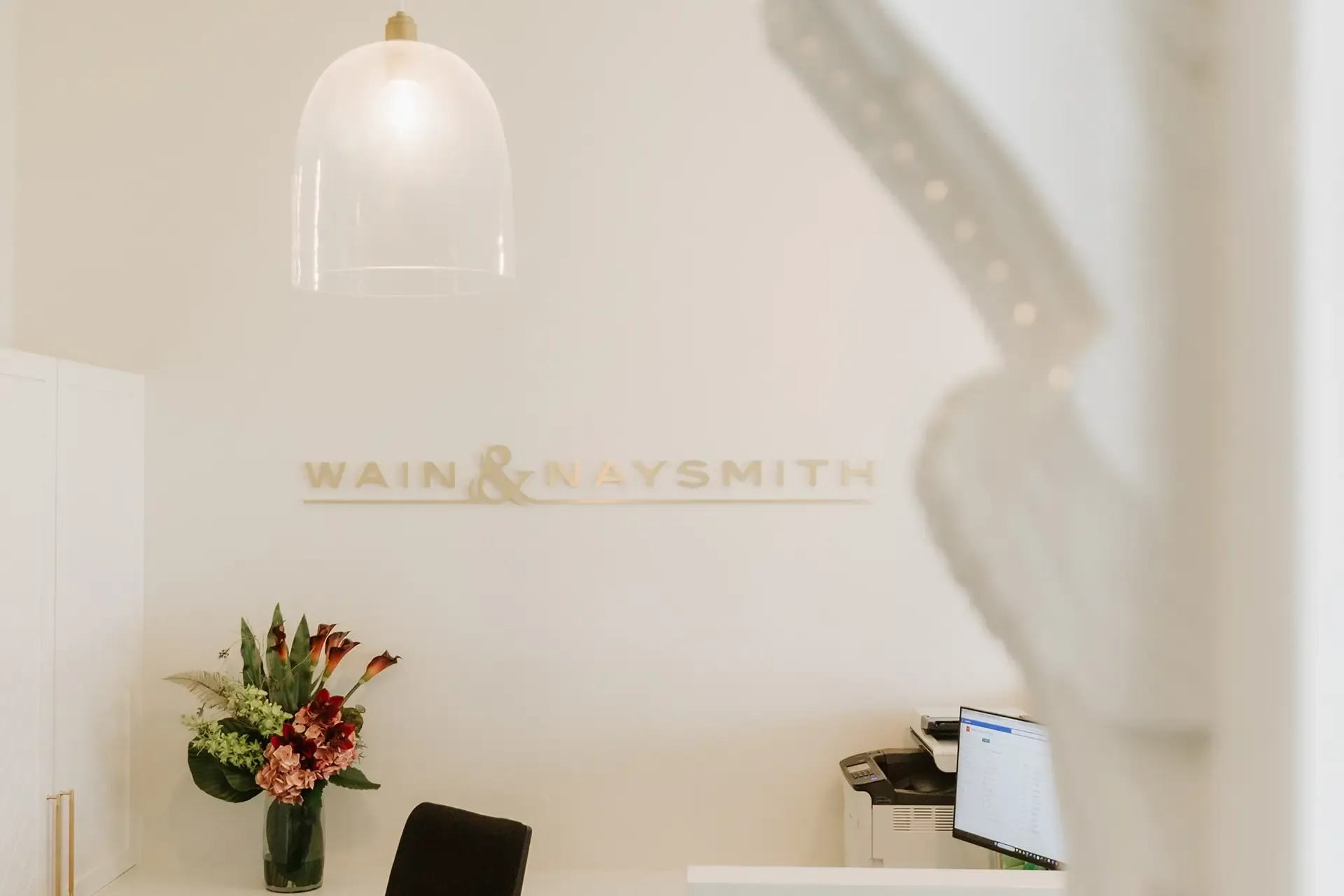
2025 saw the fifth refurbishment within the building in 115 years when we brought the reception up to date with modern bright furnishings while incorporating the heritage features of the building in the joinery.
The original hand-carved staircase running through the centre of the house remains untouched and the pressed metal ceilings, diagonal timber dados, stain-glass window and other historic features remain intact.